Best online fax service for secure document sending
So let’s talk security. What exactly qualifies an online fax service as best online fax secure? We’re not just talking about password protection or a fancy dashboard. We’re talking real-deal, ironclad encryption, compliance with legal standards (like HIPAA), and infrastructure that doesn’t leak like a cheap garden hose. If a fax service lacks even one of these, that’s a dealbreaker—especially if you’re handling legal, medical, or financial documents.
Why Faxing Still Matters in a Digital World
You might be wondering, “Why are people still faxing in 2025?” It seems like such an old-fashioned technology, especially when emails and instant messaging have become the norm for communication. However, faxing hasn’t disappeared — instead, it has transformed and adapted to the digital age. What used to be noisy, bulky machines connected by phone lines has now shifted into a sleek, internet-based system known as online faxing or digital faxing. This evolution has made faxing more convenient, accessible, and compatible with the fast-paced, mobile world we live in today.
Despite the rise of countless digital communication tools, faxing remains a trusted method in many industries where security and confidentiality are crucial. Hospitals, law firms, government agencies, and financial institutions still rely heavily on faxing to transmit sensitive documents. This is because the nature of faxing inherently provides a level of security that traditional email often cannot guarantee. Unlike emails, which can be hacked, spoofed, or intercepted, faxing offers a direct transmission route that is harder to breach, making it a safer option for confidential information.
Furthermore, legal and regulatory standards in many sectors continue to require or prefer fax transmissions for official documentation. Regulations like HIPAA in healthcare mandate strict protections for patient information, and faxing meets many of those compliance requirements. Many businesses have found that online faxing services, with their encrypted transmissions and secure storage options, help them adhere to these laws while improving efficiency. This combination of trust, security, and regulatory acceptance keeps faxing relevant even in a digital-first world.
Lastly, online faxing bridges the gap between old and new technologies, allowing organizations to maintain traditional fax numbers while benefiting from digital tools. This flexibility makes it easy for businesses to transition without losing important contacts or processes. Plus, with mobile apps and cloud integration, sending or receiving a fax can be done anytime, anywhere, without being tied to a physical machine. So, faxing isn’t just hanging on; it’s thriving as a secure, reliable communication channel adapted for the modern era.
Top Features to Look For in a Secure Fax Service
When selecting a secure fax service, it’s essential to ensure it comes equipped with features that protect your data and make your faxing experience safe and reliable. Here’s a detailed list of must-have features you should look for:
- End-to-End Encryption: This protects your documents by encrypting them before they leave your device and keeping them encrypted until they reach the recipient, ensuring no unauthorized party can intercept or read your information during transmission.
- Two-Factor Authentication (2FA): Adds an extra security layer by requiring a second form of verification, such as a code sent to your phone, making it much harder for hackers to access your account even if your password is compromised.
- Audit Trails and Delivery Receipts: Provides detailed logs of fax transmissions including time sent, time received, and delivery confirmation, so you can verify that your documents reached the intended recipient and monitor any unusual activity.
- Secure Cloud Storage: Offers encrypted storage of your fax documents in the cloud, protecting them from data breaches, leaks, or accidental exposure while allowing easy access when you need them.
- Mobile App Availability: Enables you to send and receive faxes securely on the go through smartphones or tablets, combining convenience with safety without relying on physical fax machines.
- HIPAA, PHIPA, GDPR, and Other Compliance: Ensures the fax service meets legal and regulatory requirements for handling sensitive data, which is critical if you work in healthcare, finance, or international sectors where data privacy laws are strict.
- Digital Signature Support: Allows you to add legally binding electronic signatures to your documents, which is important for contracts, approvals, and certified fax transmissions.
- User-Friendly Interface: Makes sending, receiving, and managing faxes easy without compromising security, so you can work efficiently without technical headaches.
- Multiple File Format Support: Supports a wide range of document types like PDFs, Word files, images, and more, providing flexibility in the kinds of documents you can fax securely.
- Fax Number Porting: Lets you keep your existing fax number when switching providers, avoiding disruptions and maintaining business continuity.
- Automatic Fax Forwarding: Enables incoming faxes to be securely forwarded to your email or another device, improving accessibility without sacrificing privacy.
How Online Faxing Works (Simplified)
| Step | Action Description | File Types Supported | Transmission Method | User Feedback |
| Upload Document | You select and upload your document to the fax service platform. | PDF, DOC, DOCX, JPG, PNG, TIFF, and more | Uploaded files are converted into fax format | Upload confirmation displayed |
| Enter Recipient Fax Number | You input the fax number of the person or business you want to send the fax to. | N/A | Fax number is validated before sending | Error alerts if number is invalid |
| Send Fax | You click the “Send” button to initiate the fax transmission. | N/A | The service converts documents into fax signals sent over phone lines or internet | Sending status shown in real-time |
| Transmission & Conversion | The system converts your digital document into a fax-compatible signal and sends it to the recipient’s fax machine or online fax inbox. | N/A | Signal sent via telephone network or internet protocol | Confirmation of successful transmission |
| Receipt & Tracking | After the fax is sent, you receive delivery confirmation and, in some cases, read tracking. | N/A | Notifications sent via email or app | Digital receipt and logs available |
Best Secure Online Fax Services in 2025
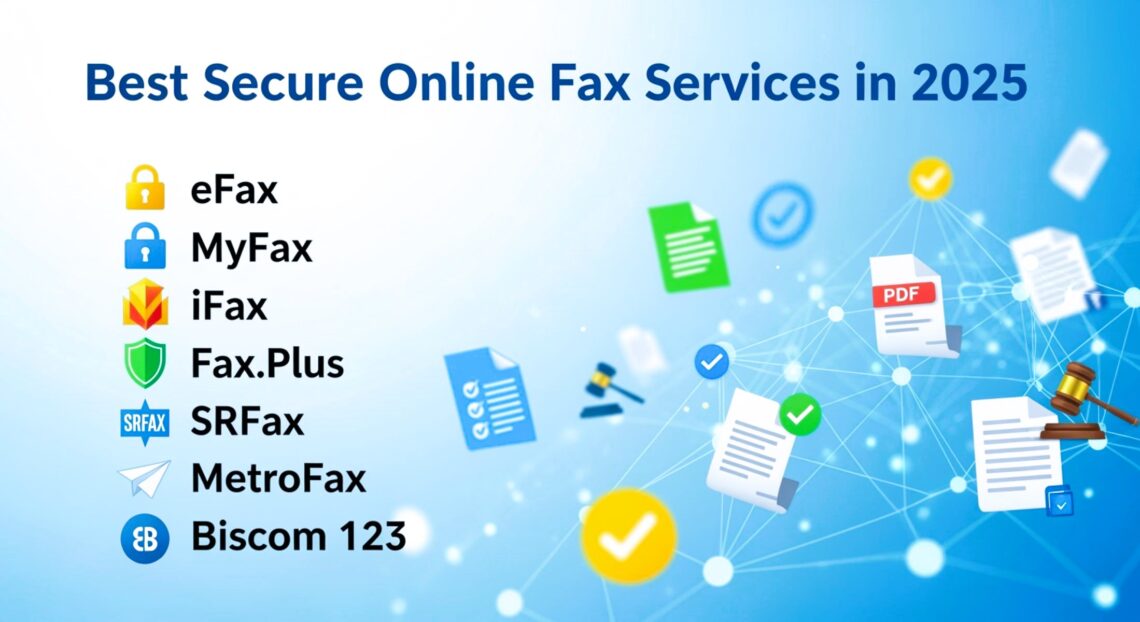
When it comes to secure online fax services in 2025, several top contenders stand out for their robust security features, ease of use, and compliance with industry standards. eFax remains a popular choice, especially for businesses that demand reliability and strong security. With 256-bit AES encryption, unlimited cloud storage, and mobile apps, eFax covers all the basics and more, including support for electronic signatures. It’s particularly well-suited for medical professionals due to its HIPAA compliance. However, users should be prepared for a higher price point and a somewhat outdated interface compared to newer competitors.
For small businesses and freelancers looking for an affordable yet secure option, MyFax offers a straightforward and user-friendly experience. Its pricing is friendly to those who don’t require heavy fax volumes, and the dashboard is simple to navigate. While it lacks a free tier and some advanced features, MyFax hits the sweet spot for those who want clean, secure faxing without unnecessary complications. It’s a solid option when you need dependable service without breaking the bank.
iFax is a standout choice for organizations that prioritize legal and medical compliance. With full HIPAA and GLBA compliance, military-grade encryption, and integration with tools like Google Workspace, iFax is designed to protect sensitive data from every angle. It also supports digital signatures, which adds another layer of legal validation. Although it comes with a steeper price and a learning curve on its advanced plans, the investment is worthwhile for businesses where data security is non-negotiable.
Fax.Plus rounds out the list as a versatile, all-around fax service that blends security with affordability. It uses strong TLS and AES encryption, offers team management tools, and even supports fax scheduling and automation, making it a great fit for teams of all sizes. While it lacks extensive international support and includes branding on its free tier, Fax.Plus delivers a smooth, reliable experience with extensive administrative controls. Other notable services include SRFax, which shines in healthcare settings despite a dated interface, MetroFax, known for budget-friendly plans and simplicity, and Biscom 123, which is geared toward enterprise users with stringent security needs. Together, these options provide a range of secure faxing solutions tailored to different business sizes and compliance requirements.
Online Fax vs. Email: What’s Safer?
When deciding between online fax and email, understanding the security differences is crucial. Here’s a detailed list of why online fax generally offers stronger protection compared to email:
- Encryption Level: Online fax services usually provide end-to-end encryption, meaning your documents are encrypted before leaving your device and stay encrypted until the recipient gets them. Email services often do not have end-to-end encryption enabled by default, leaving messages vulnerable during transit.
- Tamper-Proof Transmission: Online fax sends data in a way that makes it very difficult to alter or tamper with once sent. Emails can be intercepted, modified, or spoofed, which risks data integrity and authenticity.
- Regulatory Compliance: Many online fax providers comply with strict regulations like HIPAA (for healthcare), PHIPA (for Canadian health data), and GDPR (for European privacy laws). Email typically does not meet these compliance standards unless additional security solutions are added.
- Spam and Junk Control: Online fax lines experience very little spam or junk transmissions because of their controlled environment. Email inboxes, by contrast, often get flooded with spam, phishing attempts, and malicious links or attachments.
- Audit Trails and Logs: Online fax systems automatically keep detailed logs of every fax sent and received, including timestamps, delivery confirmation, and access history. Email systems rarely include such comprehensive audit trails unless specifically enhanced with enterprise security tools.
- Data Storage Security: Fax services often store documents in encrypted cloud storage, protecting them from unauthorized access. Emails stored on servers or devices might not be encrypted or adequately protected, increasing exposure risk.
- User Authentication: Secure fax services typically require stronger user authentication methods, including two-factor authentication (2FA), making unauthorized access much harder. Many email providers lack strong 2FA enforcement or users don’t enable it.
- Delivery Confirmation: Online faxing provides verifiable delivery receipts confirming the fax reached the intended recipient. Email “read receipts” are less reliable and often optional or ignored.
- Network Exposure: Fax transmission occurs over dedicated lines or secure internet protocols, reducing exposure to general internet vulnerabilities. Emails travel over the public internet and are subject to many more attack vectors.
- Risk of Human Error: Since faxing is usually limited to known, verified fax numbers, the risk of accidentally sending confidential info to the wrong party is lower. Email addresses can be mistyped easily and sometimes auto-complete features lead to accidental leaks.
Security Features Breakdown
| Service | Encryption | HIPAA Compliant | Two-Factor Authentication (2FA) | Cloud Storage | Audit Logs |
| eFax | Yes (256-bit AES) | Yes | Yes | Yes (secure) | Yes |
| MyFax | Yes | No | No | Yes | No |
| iFax | Yes (military-grade) | Yes | Yes | Yes | Yes |
| Fax.Plus | Yes (TLS & AES) | Yes | Yes | Yes | Yes |
| SRFax | Yes | Yes | No | Yes | Yes |
| MetroFax | Yes | No | No | Yes | No |
| Biscom123 | Yes (TLS) | Yes | Yes | Yes | Yes |
Tips for Sending Sensitive Files Online
When it comes to sending sensitive files online, especially confidential faxes, taking extra precautions is essential to ensure your information stays secure. One of the simplest but most effective steps you can take is to always use a cover sheet that includes your contact information but never contains any sensitive data itself. This way, if the fax is misdirected or intercepted, the actual confidential content remains protected, and the recipient has a way to contact you for clarification.
Double-checking the recipient’s fax number before hitting send is another critical habit to develop. Mistakes happen, and sending confidential information to the wrong person can lead to serious privacy breaches. Taking a moment to verify the number saves you from potential headaches and keeps your data in the right hands. It’s a small task that can prevent major security issues.
The network you use to send your fax matters just as much as the fax service itself. Avoid using public or unsecured Wi-Fi networks, like those found in coffee shops or airports, when sending sensitive files. Instead, opt for a trusted, secure internet connection—preferably your home or office network that uses strong encryption and passwords. This minimizes the risk of interception by malicious actors while your documents are in transit.
Finally, after you’ve sent your fax, make sure to log out of your fax service account, especially if you’re using a shared or public device. Additionally, store any copies of your sensitive documents in encrypted cloud storage rather than on local devices or unprotected drives. This extra layer of security keeps your data safe from unauthorized access even after transmission, giving you peace of mind that your confidential files remain protected throughout the entire process.

You May Also Like

Enterprise Cloud Fax Solutions: Features to Look For
How to Create a Secure File Workflow for Client Onboarding